
Bachelor Fashion Designer in English
back-to-school date
September 2026
Available at:
Valid secondary school diploma (national or international)
Place:
Paris
Title:
"Stylist - Fashion Designer" registered to RNCP at level 6 (French recognition).
Target audience:
Passionate about the world of fashion
Objectives:
Create clothing collections
100 % English program
Entry requirements: Post-Bac or direct entry into 2nd or 3rd year depending on level and experience.
Duration: four years (three years plus a professionalisation year).
Qualification: Level 6 title registered on the RNCP*.
*The professional certification 42512 is currently undergoing a renewal application for its registration in the RNCP at level 6.
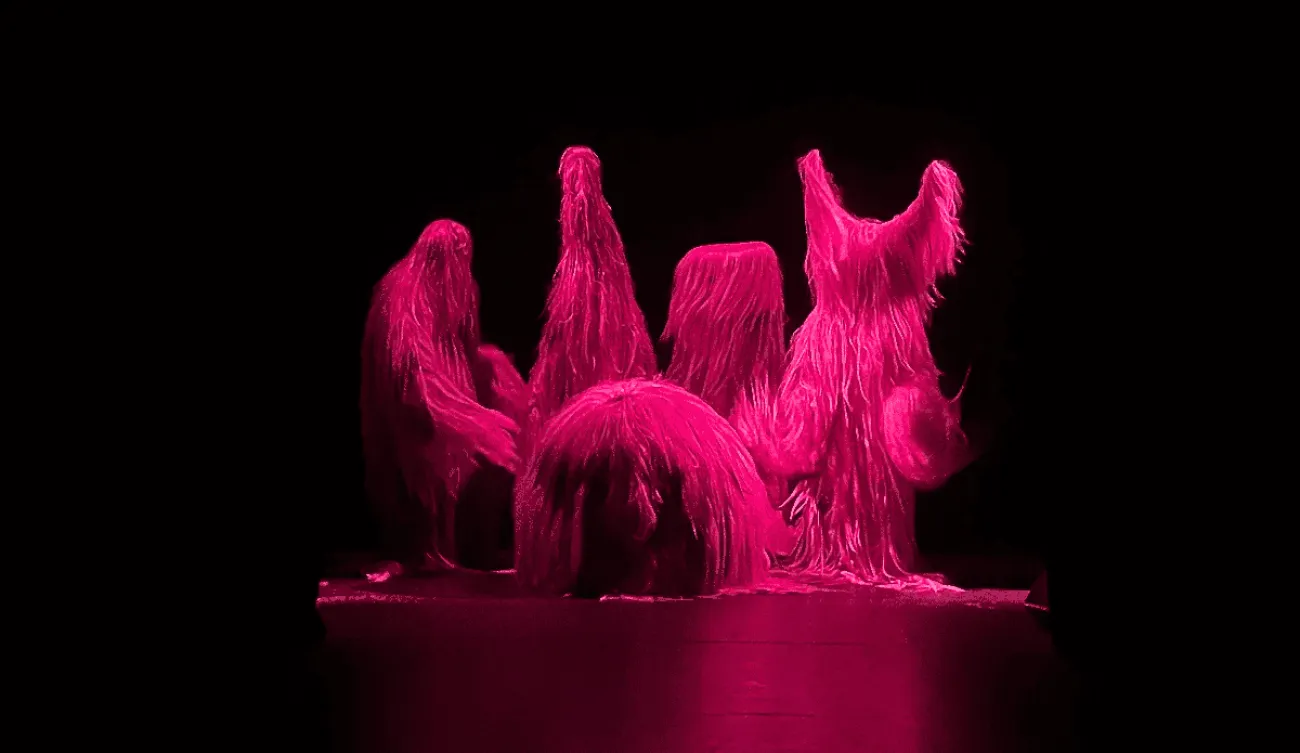
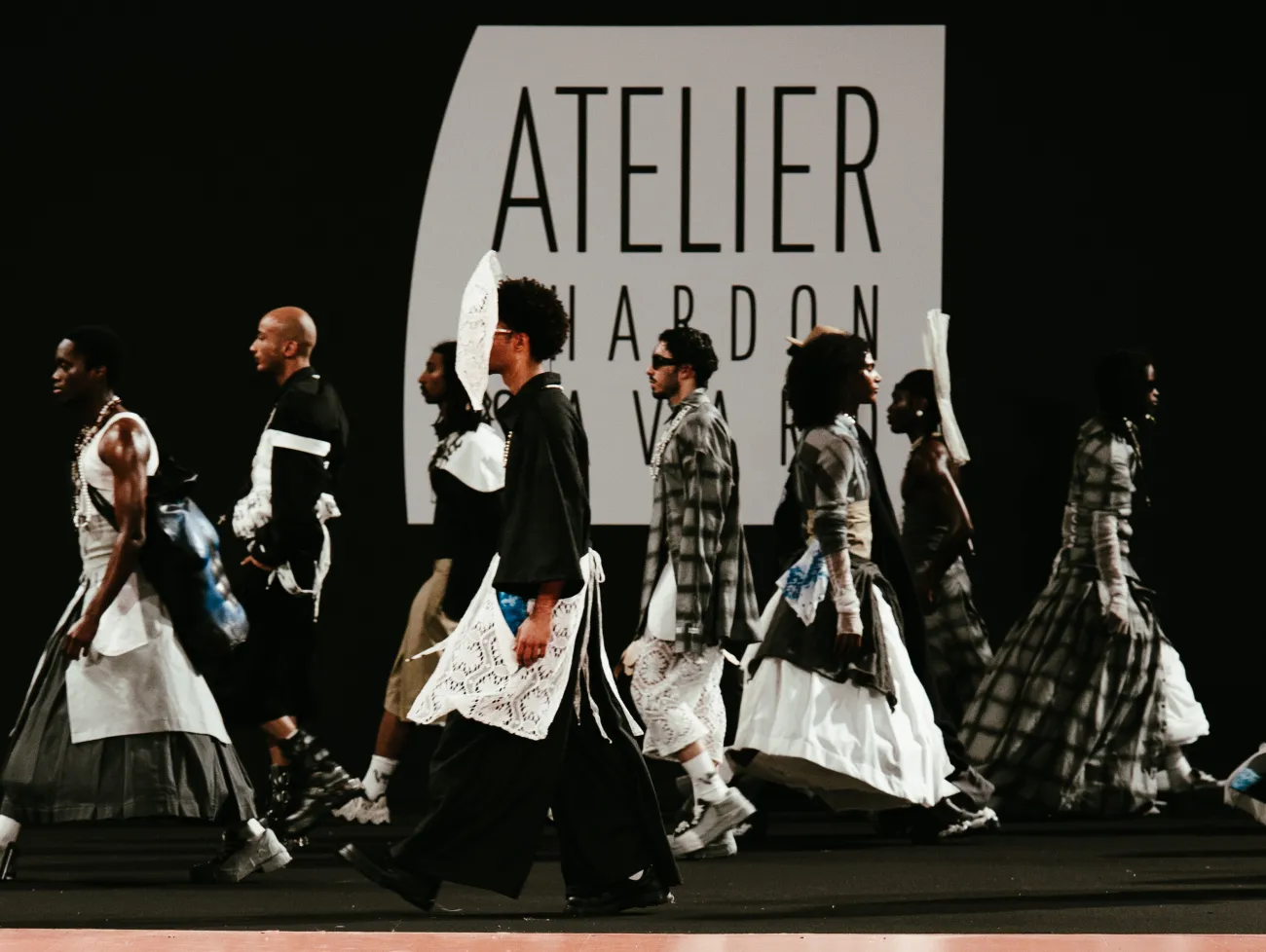
The Bachelor Fashion Designer is a degree taught entirely in English by Anglo-Saxon lecturers. It combines the heritage of our Parisian fashion school with the demands of the international market where professional exchanges often take place in English. During the program you will learn to analyse brands, decode trends and build style dossiers. You will develop your creativity and learn to realise your designs in our sewing workshops.Each academic year concludes with an event that showcases the students’ creative work. In the first year, an exhibition highlights the very first silhouettes designed by our young designers. In the second and third years, students create full collections and present them during the end‑of‑year fashion show.
Whether you envisage a career in haute couture, luxury or ready-to-wear, the English terminology you gain will allow you to work anywhere in the world. Your role will be to imagine, draw and create the garments that will form tomorrow’s collections and to develop a complete line based on a collection plan.
Program overview
Year 1 – Experiment without limits
Develop your creativity by experimenting with different materials (plastic, textiles).
You will improve your observation skills through drawing and explore the fundamentals of fashion culture.
Workshops in fashion styling reveal your artistic potential, while an internship, exhibition visits and professional talks complete the year.
Year 2 – Pattern cutting & catwalk
You learn every stage of collection development:
- building style dossiers
- technical and creative pattern cutting
- technical drawing
while continuing to nurture your creativity.
Year 3 – Become a professional designer & specialise
Professional designers need to understand a market sector and target audience and to solve technical and creative problems.
You will learn to develop iconic pieces, prints and materials. During this year you choose a specialism to strengthen your skills in knitwear, pattern cutting (chaine & trame) or accessories.

Year 4 – Internships & professionalisation
Immersion in a company is the best way to understand the profession.
During your final year you undertake a compulsory six-month internship and have the option of a second six-month placement so that you accumulate a full year of professional experience before entering the workforce.
Pathways & career prospects
After graduation students may enter the workforce or continue their studies with the "Mastère Créateur de Mode" at Atelier Chardon Savard.
Depending on the size of the organisation in which they work, fashion designers may be required to work as part of a team with pattern makers and garment makers, or to carry out these various tasks alone. In the latter case, they will delegate some of their activities to service providers and be responsible for coordinating them. This is why fashion designers need to be versatile and multidisciplinary. The environment in which fashion designers work will therefore influence not only their scope of action and the tasks assigned to them, but also their job title and position in the production chain.
Types of jobs available:
Positions available at the start of a career:
- Junior designer
- Ready-to-wear stylist
- Pattern maker
- Textile designer
- Fashion designer
- Designer/stylist
- Fashion designer
- Fashion creator
- Costume designer
- Stylist consultant
Positions available after a few years of experience:
- Product manager
- Collection/line manager
- Creative director (fashion)
- Artistic director (fashion)
- Collection director
Tuition fees
| Year | EU nationals | Non-EU nationals |
|---|---|---|
| 1st year | €12 090 | €13 190 |
| 2nd year | €12 190 | €13 290 |
| 3rd year | €12 290 | €13 390 |
| 4th year | €1 990 (internship year) | €1 990 |
A non-refundable application fee of €590 is payable once upon first enrolment
Frequently asked questions
Total volume is approximately 2 135–2 168 hours depending on the specialisation (chain & trame, knitwear or accessories), including distance and in-person learning, master classes, evaluation time and professional support.
- Year 1 comprises 660 hours plus a one-month internship
- Year 2 has 632 hours plus a two-month internship
- Year 3 ranges from 643.5 to 675.5 hours depending on the specialisation
- Year 4 includes 200 hours plus a six-month internship
Total volume is approximately 2 135–2 168 hours depending on the specialisation (chain & trame, knitwear or accessories), including distance and in-person learning, master classes, evaluation time and professional support.
- Year 1 comprises 660 hours plus a one-month internship
- Year 2 has 632 hours plus a two-month internship
- Year 3 ranges from 643.5 to 675.5 hours depending on the specialisation
- Year 4 includes 200 hours plus a six-month internship
Students with disabilities can contact the dedicated disability officer for advice and adjustments during the course and for internships. handicap@atelier-chardon-savard.com
Students with disabilities can contact the dedicated disability officer for advice and adjustments during the course and for internships. handicap@atelier-chardon-savard.com
Applicants must have at least B2 level English (IELTS, TOEIC, TOEFL, Cambridge).
Entry into the first year requires a high-school diploma (Level 4 certificate or equivalent).
Entry into the second year requires a Level 4 certificate plus 60 ECTS in fashion or design; entry into the third year requires Level 5 or Bac+2 or 120 ECTS in fashion/design.
Admission is by application and interview; candidates must submit diplomas, ECTS transcript, CV and motivation letter.
Admissions are open from October to August and processed within three weeks. Late entry is possible up to two months after the start date, subject to catch-up.
Applicants must have at least B2 level English (IELTS, TOEIC, TOEFL, Cambridge).
Entry into the first year requires a high-school diploma (Level 4 certificate or equivalent).
Entry into the second year requires a Level 4 certificate plus 60 ECTS in fashion or design; entry into the third year requires Level 5 or Bac+2 or 120 ECTS in fashion/design.
Admission is by application and interview; candidates must submit diplomas, ECTS transcript, CV and motivation letter.
Admissions are open from October to August and processed within three weeks. Late entry is possible up to two months after the start date, subject to catch-up.
Assessment methods include continuous assessment through coursework and practical assignments, group projects (exhibition in year 1, fashion show in year 2) and professional juries.
In year 3, projects are based on real or simulated briefs covering collection design, modelling, production and promotion.
Assessment methods include continuous assessment through coursework and practical assignments, group projects (exhibition in year 1, fashion show in year 2) and professional juries.
In year 3, projects are based on real or simulated briefs covering collection design, modelling, production and promotion.